


For patients
This page is general information and is not for emergencies. If you have sudden chest pain, shortness of breath or fainting, call your local emergency number — 112 in Türkiye.
Plain, calm information about the Cardisiography test. On this page you will find how the test is done and how your physician reviews the result with you.
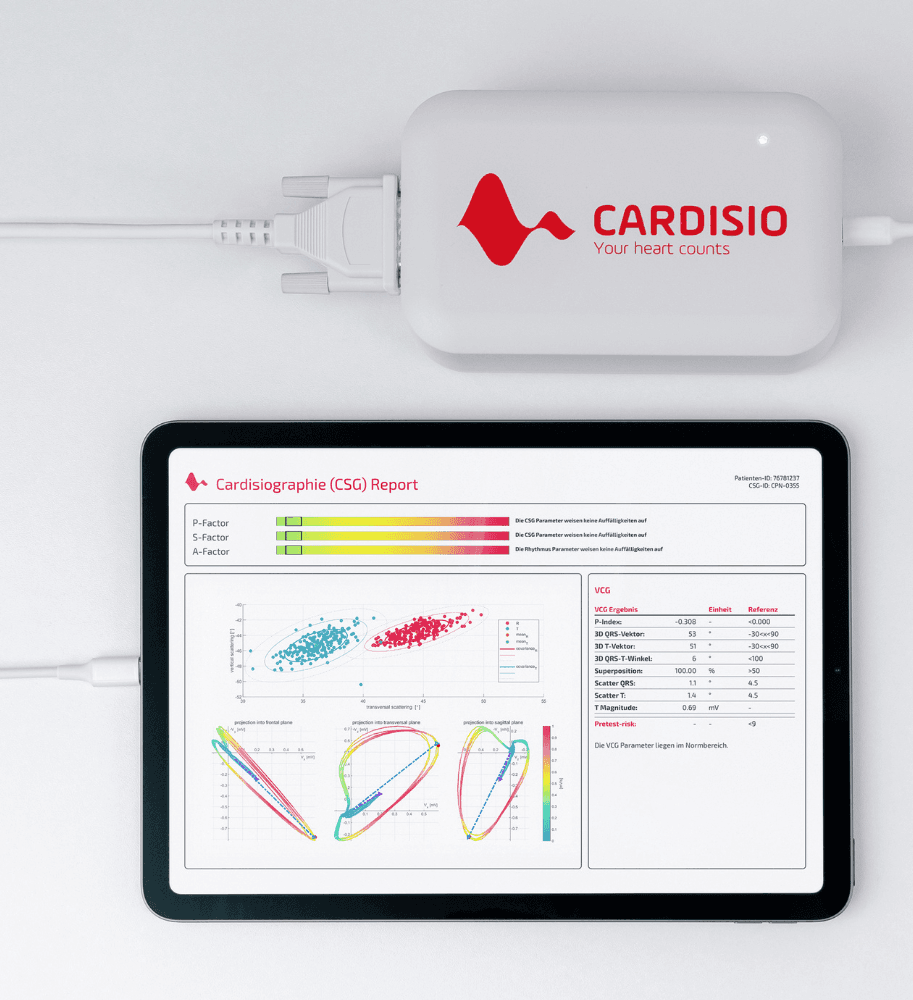
What is Cardisiography?
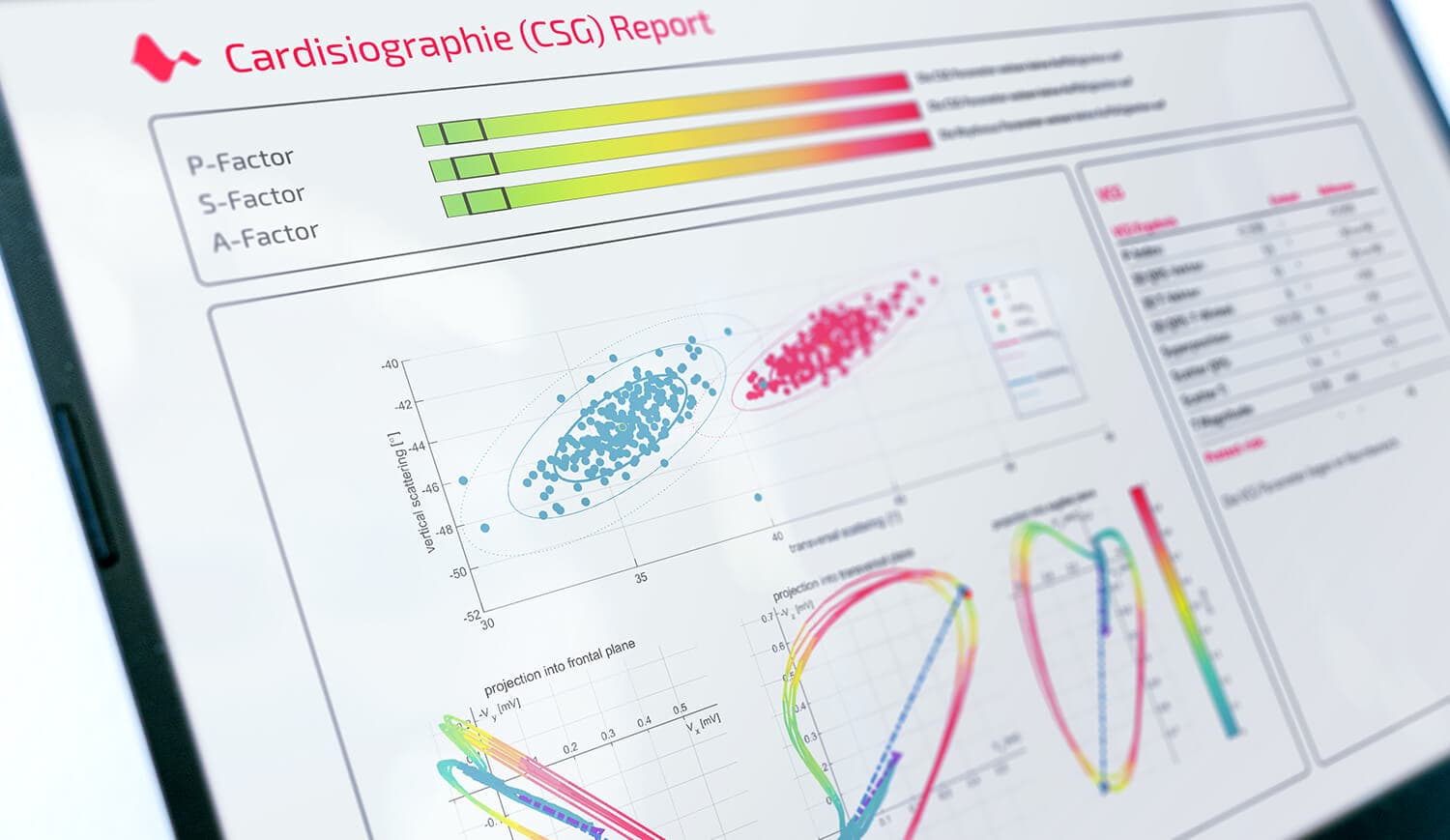
Cardisiography is a heart screening test that records the electrical activity of the heart and analyses it with the support of artificial intelligence. It is non-invasive and is performed while you are at rest. The electrodes are attached to your skin, as in a familiar ECG. The resulting report helps your physician assess your heart health.
How is the test done?
The test is completed in three steps.
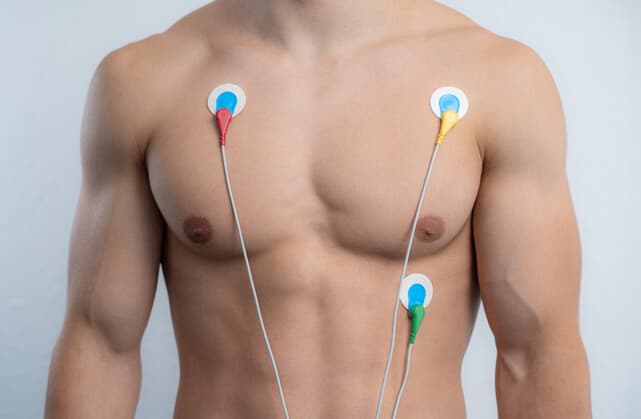
Recording
While you rest, five electrodes are attached to your body, as for an ECG. The electrical signals of your heart are recorded for four minutes.
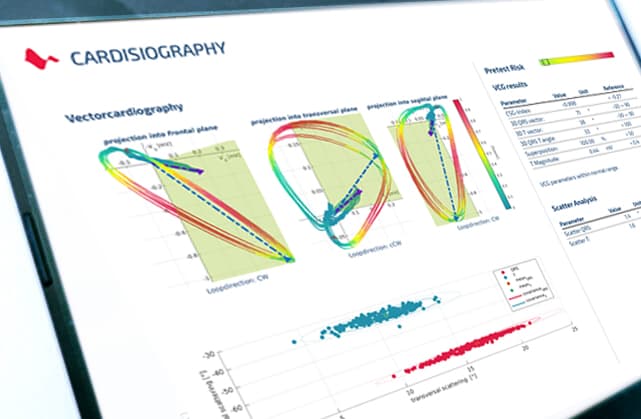
Analysis
The recorded signals are transmitted immediately to the Cardisio server and processed into a report by an AI-supported algorithm.
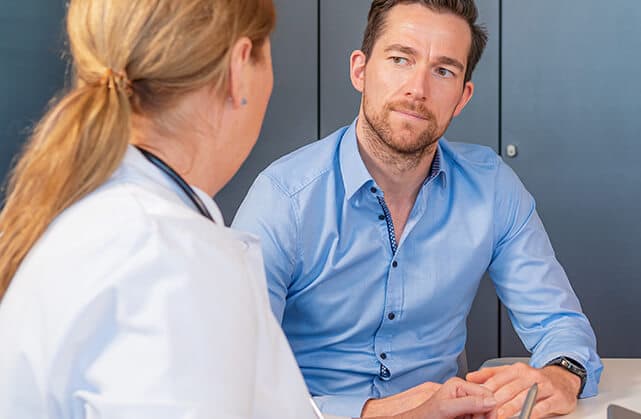
Consultation with your physician
Your physician reviews the report and discusses the results with you. You decide on any next steps together.
Who might ask their physician about the test?
Cardisiography is for adults aged 18 and over, with or without symptoms, and supports the physician's decisions. If you have symptoms without a clear cause, such as shortness of breath, fatigue or back pain, or if you would like to know more about your heart before a procedure under anaesthesia, you can ask your physician about Cardisiography. Your physician decides whether the test is right for you.
Who is the test suitable for, and who is it not?
The points below are based on the manufacturer's instructions for use; your physician makes the final decision.
Adults aged 18 and over
Cardisiography is performed on adults aged 18 and over.
Pacemaker or active implant
It is not performed on people who have a pacemaker or another active implanted device.
While wearing a Holter monitor
The recording is not taken while a device such as a Holter ECG is being worn.
Performed by a healthcare professional
The test is not for home use. A healthcare professional takes the recording.
If you have a known heart condition, or have had a stent or bypass surgery, talk to your physician before having the test.
How to prepare for the recording
These steps help keep the recording quality high. You can ask the centre where you have the test about anything unclear.
Exercise and strenuous activity
Avoid exercise or stressful activity in the 2 hours before the recording.
Coffee and stimulants
Avoid strong coffee or other stimulants for at least 2 hours before the recording.
Phone and electronic devices
Keep your mobile phone and other electrical devices at least 1 metre away. Show any electronic watch to the staff as well.
Clothing
If you wear a bra with metal parts, you will be asked to remove it before the recording.
During the recording
Sit or lie in a comfortable position. Do not move or talk during the four minutes.
What the result tells you, and what it does not
Results are shared together with your physician's interpretation.
What is the result?
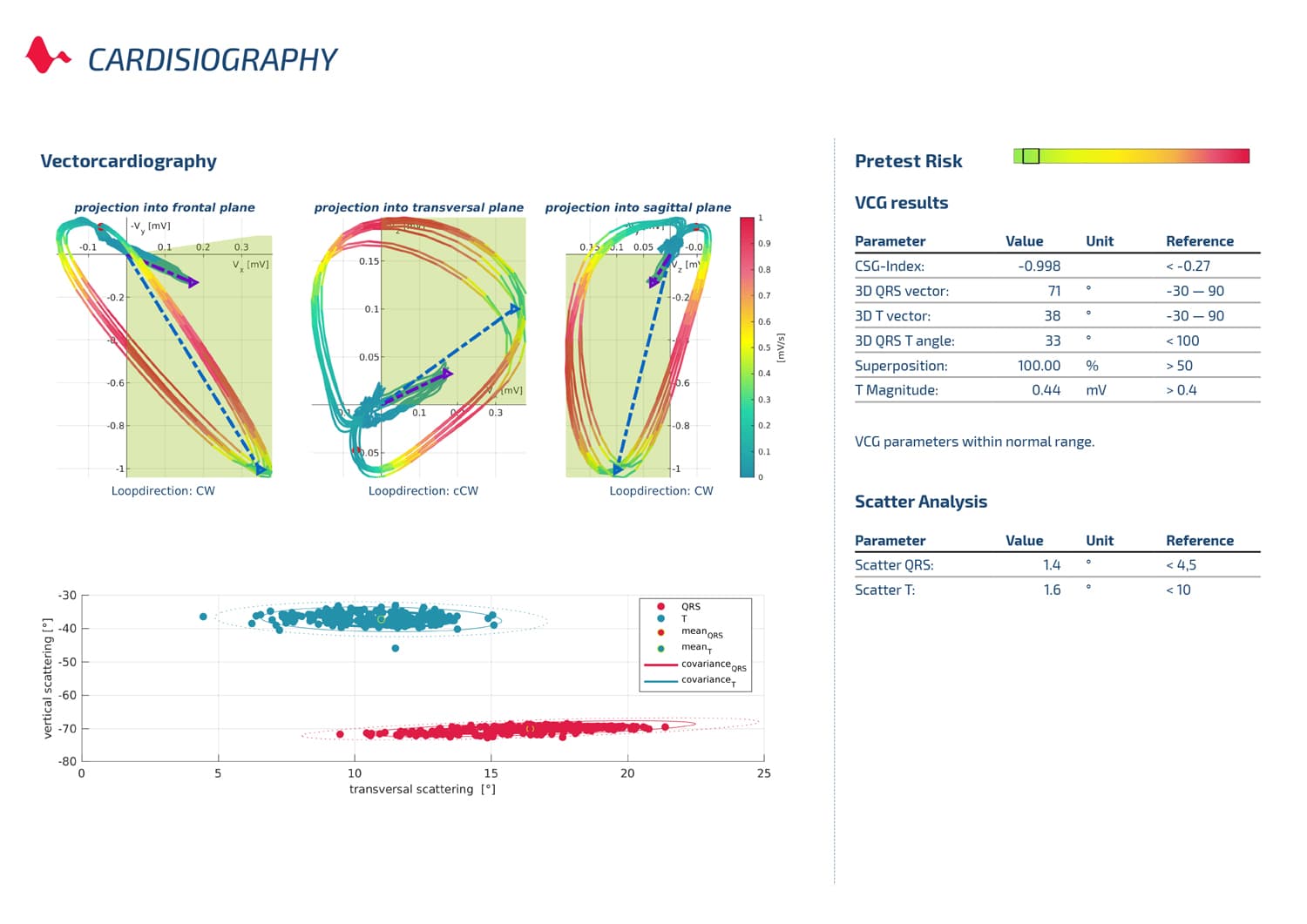
The report brings together indicators of the heart's blood supply, its structure and its rhythm. Your physician interprets these indicators together with your examination and your medical history.
What is the result not?
The report is not a diagnosis on its own and does not recommend treatment. It is meaningful only together with your physician's assessment; if further tests are needed, your physician decides on them.
Separate results for women and men
In a multicentre study, the Cardisiography results of 595 patients were compared with coronary angiography and reported separately for women and men. Sensitivity was 90.2% in women and 97.2% in men; specificity was 74.4% in women and 76.1% in men. The study was retrospective and included patients who had undergone angiography, so the results cannot be applied directly to everyone; your physician interprets your result.
Frequently asked questions
Does the test hurt?
Cardisiography is a non-invasive test. The electrodes are attached to your skin, as for an ECG.
How long does the test take?
The signal recording takes four minutes. Results are available within 1 minute of the recording.
Does the test involve radiation?
No. Cardisiography uses no ionising radiation and no contrast agents; it only records the electrical signals of your own heart.
Do I need to prepare before the test?
Avoid exercise or stressful activity in the 2 hours before the recording. Avoid strong coffee and other stimulants for at least 2 hours beforehand. Keep your phone at least 1 metre away during the recording. You can ask the centre where you have the test any other questions.
What age is the test for?
It is performed on adults aged 18 and over.
I have a pacemaker. Can I have this test?
No. Cardisiography is not performed on people with a pacemaker or another active implanted device. Talk to your physician about which examination is right for you.
Who reviews my result?
An AI-supported algorithm prepares the report, and your physician reviews the result. The report should only be interpreted together with a physician's assessment.
Is Cardisiography the same as an ECG?
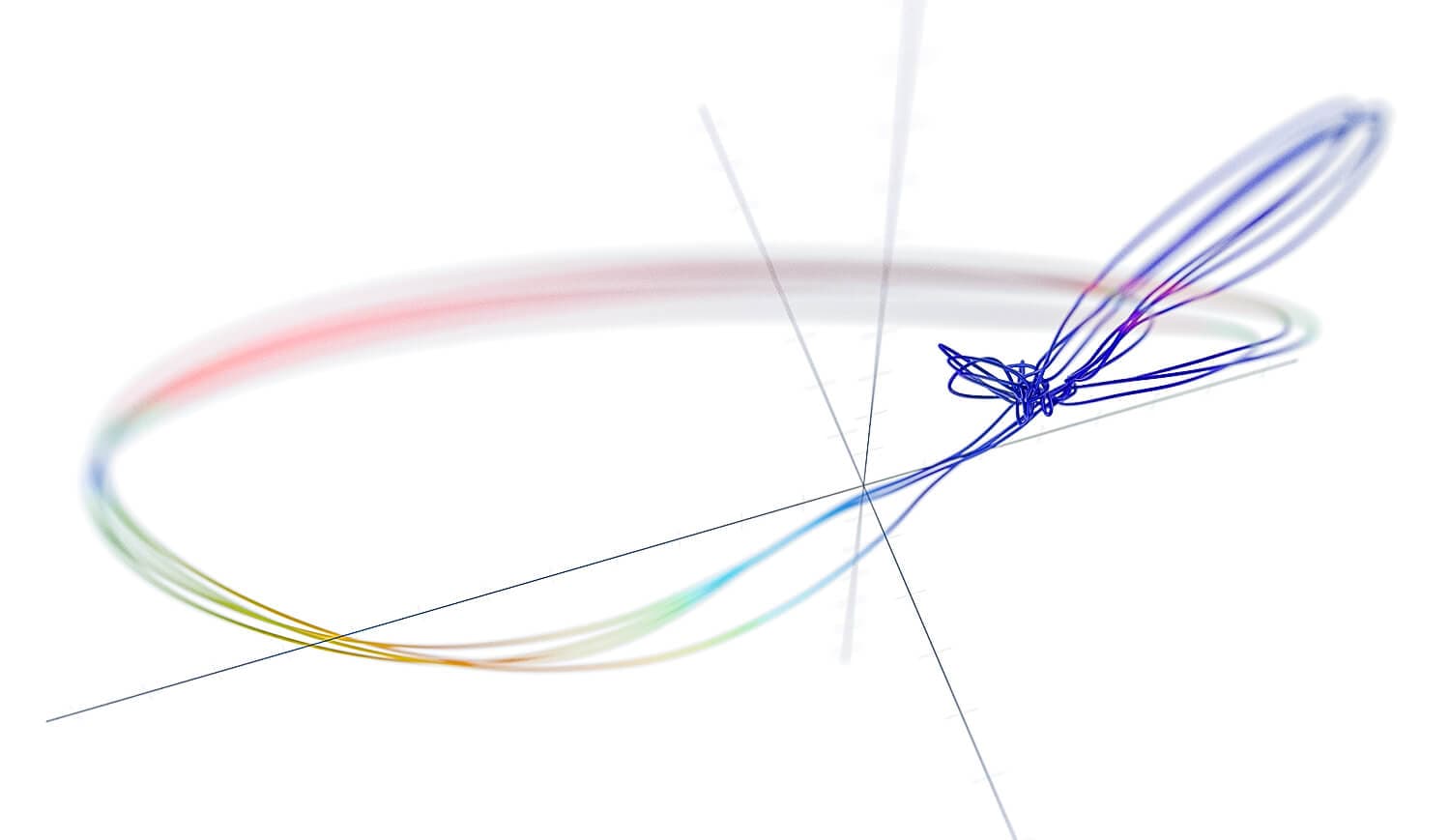
The electrodes are placed in a similar way to an ECG. The difference is that the recording lasts four minutes instead of a few seconds, and the signals are analysed with vectorcardiography, which examines the electrical activity of the heart in three dimensions.
What happens if my result is normal?
No single test tells you everything. Whatever your result, the best course is to talk with your physician about what it means and what the next step is.
Where can I have the test done?
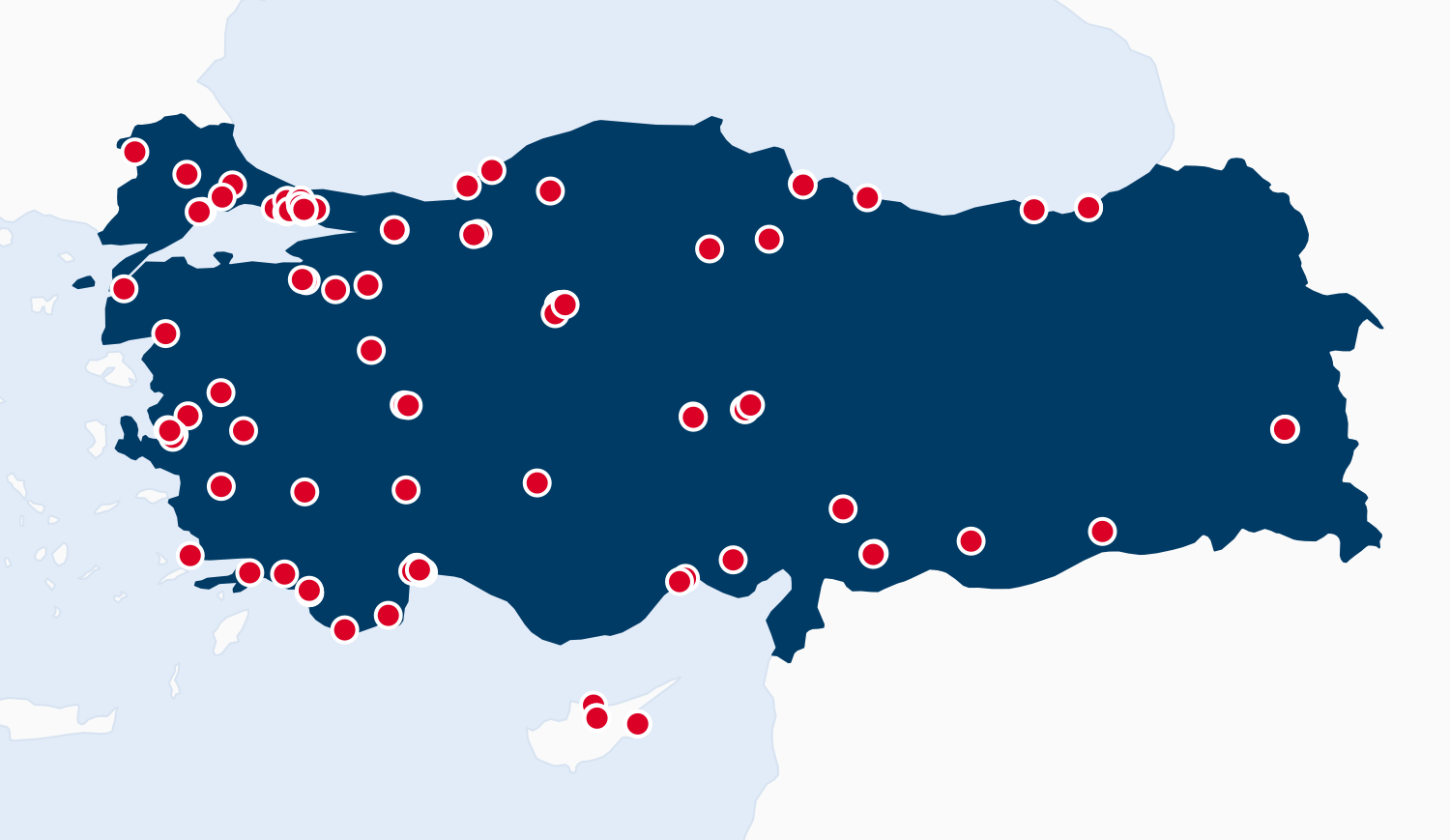
You can find the centre nearest to you on our Centres page. You can also write to us through the request form by choosing “Find a centre” as the request type.
Where can I have the test done?
Our centres
Find out moreOur centresYou can find the centres that offer the Cardisiography test by city and region on our Centres page.
Cardisiography
Find out moreCardisiography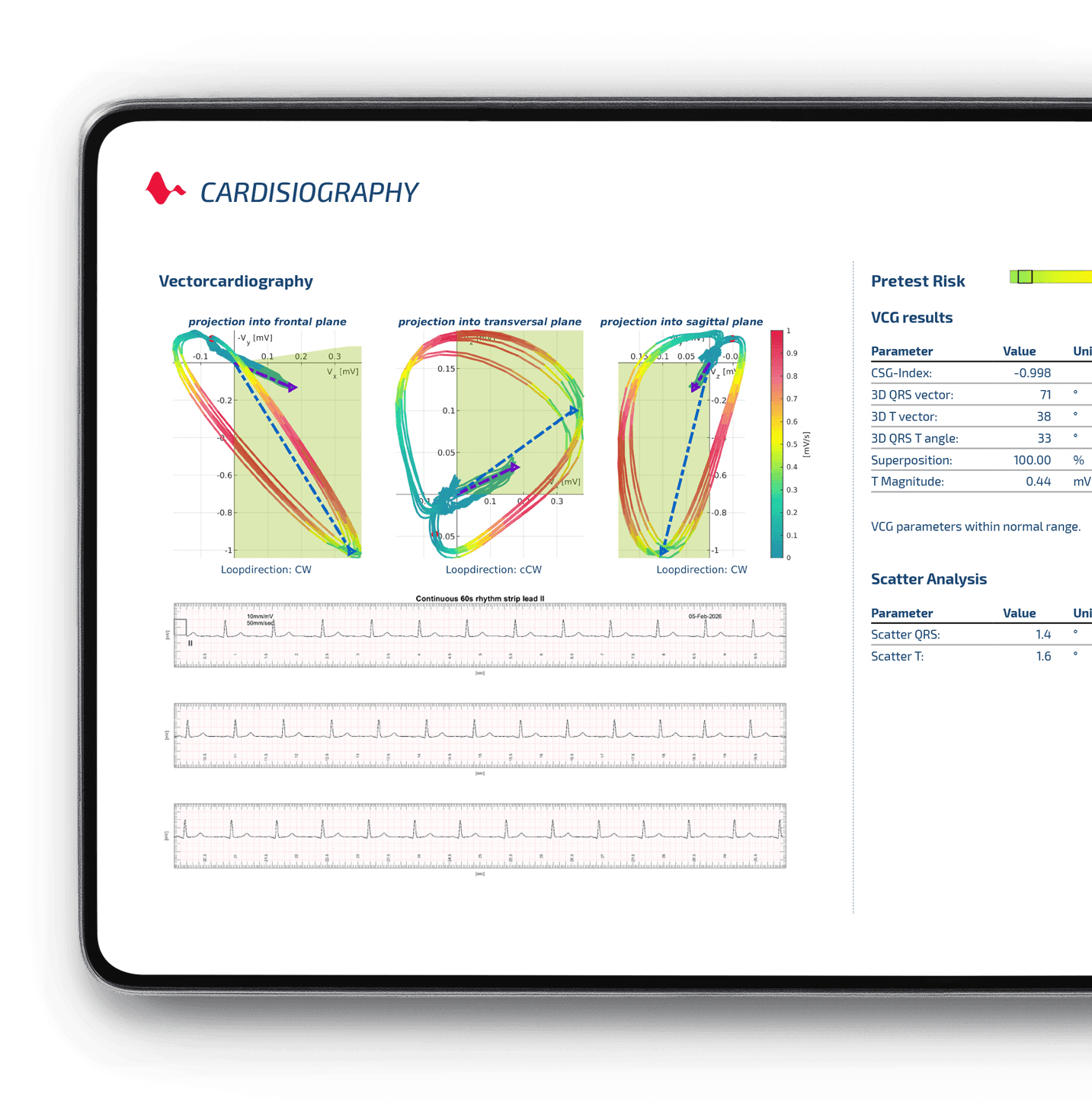
Find a centre
Find out moreFind a centre
Important information
Cardisiography does not diagnose; it provides decision support to the physician in the diagnostic process. The physician makes the diagnosis. The information on this page does not recommend treatment and does not replace an examination by a physician. Please consult your physician for every decision about your health. If you have symptoms such as chest pain, tell your physician about them whatever your test result.