


For clinicians and institutions
Cardisiography assesses the heart's electrical activity from a short recording at rest and gives the physician an easy-to-interpret report.
Cardisiography was developed to give internists and cardiologists decision support as they assess heart conditions quickly, precisely and non-invasively.
How it fits your workflow
The test is performed much like an ECG, with five electrodes, at rest.
Recording without exercise
With the patient at rest, five electrodes are attached and a four-minute recording is taken.
Automatic report
The parameters are sent to the Cardisio server; a PDF report produced by an AI algorithm is delivered instantly.
Results within 1 minute
Results within 1 minute of the recording; a medical professional discusses the results with the patient.
Little equipment
A Windows 10+ PC or laptop with internet, a data collector incl. electrode cable, and five disposable electrodes per measurement.
What it brings to your institution

Hospitals
As a non-invasive, radiation-free modality, it may help optimise patient selection for advanced imaging or intervention.

Clinics
The report also gives the percentage of heartbeats outside the norm, which helps assess which patients would benefit from a Holter monitor.

Private practices
It is suitable as a pre-selection tool to decide on non-invasive imaging in patients with suspected CHD, and can be used in regular checkups such as annual visits.
Workplace health programmes
The recording takes four minutes with five electrodes while the employee rests. No dedicated room, lead shielding or radiation licence is needed. A healthcare professional takes the recording. The report is ready within 1 minute of the recording and is assessed by the occupational physician.
Introduction and demo
We introduce the method and the report to your occupational physician with a live demo.
Pilot
The test is run at your workplace with a selected group of employees; the process and results are reviewed together.
Tailored proposal
After the pilot, a proposal tailored to your organisation is prepared.
Regulatory status
ÜTS registered. CE certificate. Class I under MDD; transition to MDR Class IIa in progress.
Insurance
A HUV code exists, and private health insurers have a 70-unit payment scope defined. This does not mean payment is guaranteed.
Frequently asked questions
Who performs the test?
The recording is taken by attaching electrodes, similar to an ECG; a medical professional discusses the results with the patient.
How soon is the report available?
Results within 1 minute of the recording.
What does the CSG Index show, and what does it not show?
The CSG Index is the output of the Cardisio AI algorithm and ranges from -1 to +1. A negative value is not considered a notable finding. A positive value is considered in the direction of possible reduced perfusion in the sense of macro- or microvasculopathy. For sensitivity reasons, the manufacturer set the cut-off at -0.27 rather than zero. The index does not show how large a possible perfusion deficit is. It shows how closely the measurement agrees with pathological and non-pathological patient cohorts. For example, -0.973 means 97.3% agreement with the cohort without significant stenosis.
Which thresholds produce yellow and red factors?
The P and S factors are derived from a combination of the AI algorithm with vectorcardiography and ECG parameters. For the A factor, the manufacturer states these ECG thresholds: PQ above 250 ms or below 100 ms yellow; QT above 470 ms yellow; QRS above 130 ms yellow, above 140 ms red; heart rate above 110 bpm or below 40 bpm yellow. The factors guide the physician; assessment and next steps remain with the physician.
How are pre-test scores classified?
Low 0–8 points, intermediate 9–15 points, high 16–24 points.
Which reference value does the rhythm analysis use?
The rhythm parameter is the percentage of RR intervals outside the reference ellipse in the Poincaré plot. Per the manufacturer's reference value, more than 10% of beats outside the ellipse is considered abnormal with regard to arrhythmia.
Further information

Clinical evidence
Find out moreClinical evidence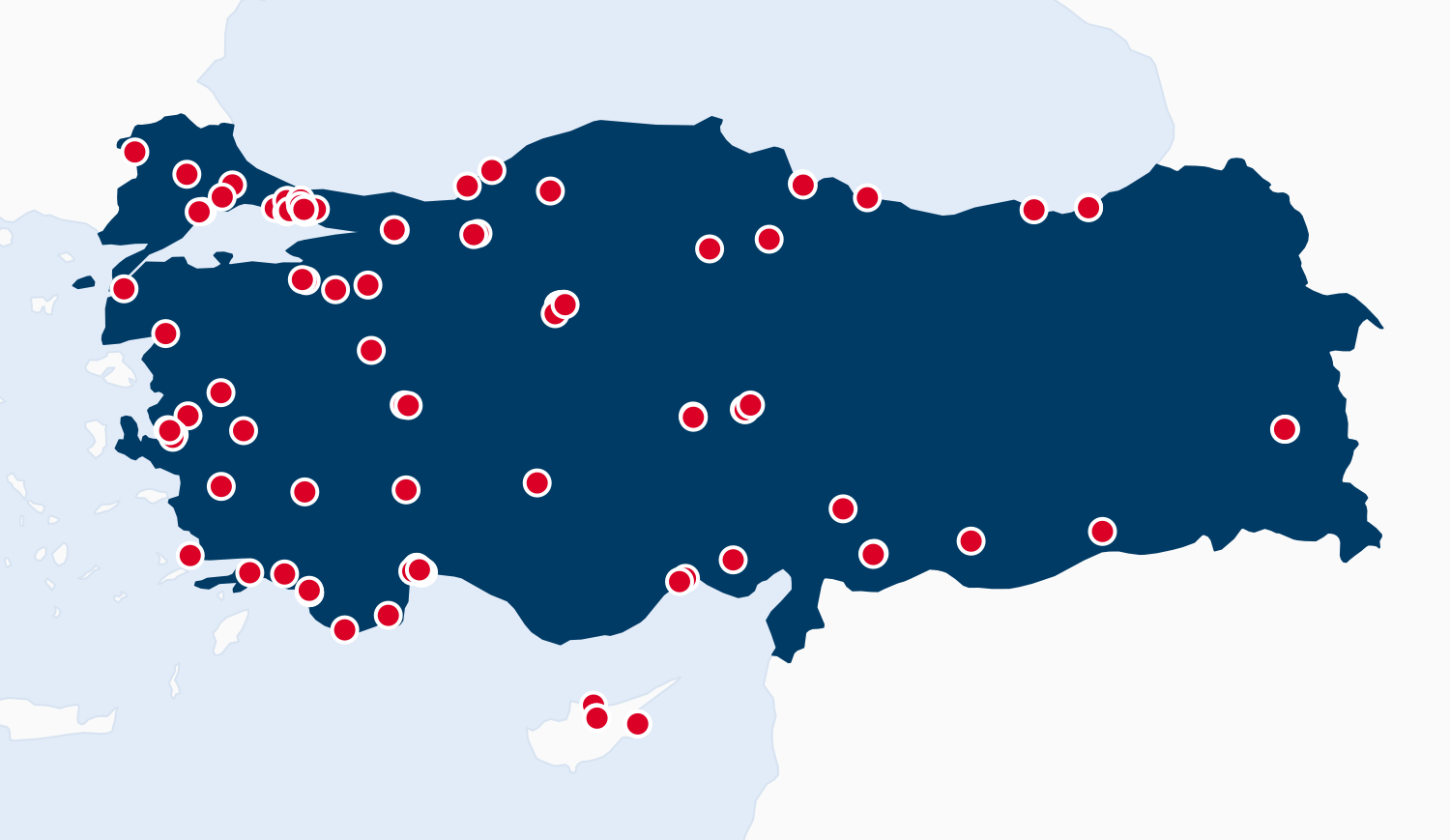
Centres
Find out moreCentres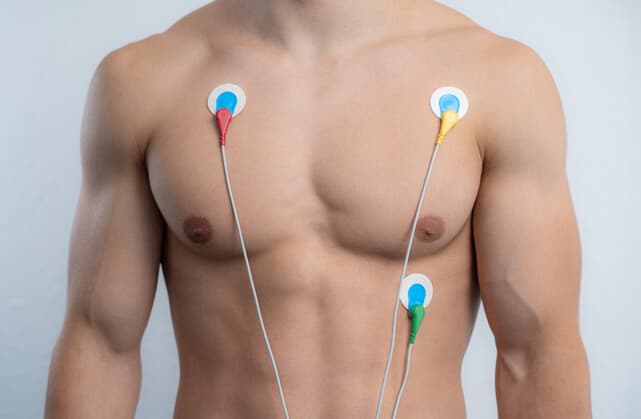
Request a quote
Find out moreRequest a quote
Requesting a quote or demo
When you complete the quote form, our team will contact you.
- Complete the form
Tell us your institution type and estimated number of tests per month; tick the demo option if you would like one. - Conversation
We review your needs, the setup requirements and your workflow together. - Quote
We send you a written quote suited to your institution.